Memorial Day: How Communities Honor Both Military and Civilian Lives

There’s a moment many funeral directors recognize on Memorial Day weekend.
A family arrives at the cemetery early in the morning, before the larger crowds begin to gather. Fresh flowers are placed carefully beside a headstone that’s been visited for decades. A grandfather tells a story a younger child has never heard before. For a few quiet moments, memory becomes something shared between generations. You see how remembrance continues to hold communities together.
When remembrance becomes collective again
Memorial Day has always carried a different feeling than other holidays.
For many families, the day begins by honoring military service and sacrifice. Flags are placed carefully beside gravesites. Veterans’ names are read aloud publicly. Communities gather for ceremonies that connect generations through shared remembrance. But alongside those moments, something broader often unfolds.
Families also spend the day remembering parents, grandparents, spouses, neighbors, and friends whose lives shaped the community around them. Stories are shared across picnic tables and cemetery paths alike. Someone points toward an old family plot and explains who’s buried there. Children hear names they’ve never heard before.

In many ways, Memorial Day becomes a reflection of how communities remember all the people who helped shape them. That matters because connection looks different than it once did. Families are spread across the country. Local newspapers have changed. Community gathering spaces continue shifting. Yet even now, people still look for ways to stay connected to the lives and stories that shaped their town.
You’ve likely seen parts of that shift within your own community. Many families still look for meaningful ways to honor a life and include people who may not be able to attend in person. The need for remembrance hasn’t faded. If anything, it’s become more visible.
The moments families remember most
In funeral service, the details families hold onto are rarely formal.
It’s the veteran who wore the same hat every morning for thirty years. The grandfather who waved at every passing neighbor from his driveway. The mother who kept birthday cards tucked into a kitchen drawer long after her children grew up. Those are the stories people repeat during Memorial Day cookouts and cemetery visits. Not because they’re polished, but because they feel real.
The stories communities hold onto are usually the quiet ones, the details that make someone instantly recognizable to the people who loved them.
You already create space for those stories every day, in arrangement rooms, during visitations, and at services where laughter unexpectedly cuts through grief for a few moments. What’s changing is how far those stories can travel.
A relative across the country wants to feel connected to the service. An old coworker sees an obituary online and reaches out to the family. Someone watching a local memorial segment recognizes a familiar face and pauses to remember. These moments may seem small, but they stay with people.
Extending remembrance beyond the service
For many funeral homes, Memorial Day also highlights something else, communities still want shared spaces for remembrance. That doesn’t always mean gathering physically in the same room. Sometimes it looks like a memorial video being shared between family members late at night. Sometimes it’s a local television segment that reaches someone who never knew services were happening. Sometimes it’s simply hearing a person’s name spoken publicly and feeling reminded that their life touched others.
None of this replaces the care happening inside your funeral home. It extends it.
The care you’re already providing, listening to families, understanding who someone was, helping create meaningful moments, can now reach beyond the immediate service in ways that feel natural to how communities communicate today. And often, families deeply appreciate that continued connection.
They revisit tribute videos months later. They send memorial clips to younger relatives. They return to shared stories during anniversaries and holidays when grief feels closer to the surface again. Memorial Day simply brings that reality into sharper focus.
Extending remembrance into the wider community
Funeral homes have long been part of the foundation of local communities.
You’re often the people families turn to when they need guidance, steadiness, and a place to gather around memory. Memorial Day simply makes that role more visible. It reminds people that remembrance is not separate from community life, it’s part of what holds communities together.
That’s also why broader visibility matters. When memorial stories reach beyond the immediate service, more people have the opportunity to participate in remembrance. Someone watching a local broadcast may recognize a familiar face and stop what they’re doing for a moment. A former neighbor may hear about a passing they otherwise would have missed. A family member who couldn’t attend services can still feel connected to the community surrounding them.
Broadcast memorials create those moments quietly, but consistently. They help stories travel further while still feeling grounded in the local community where a life was lived. The role local storytelling still plays in community life remains incredibly important.
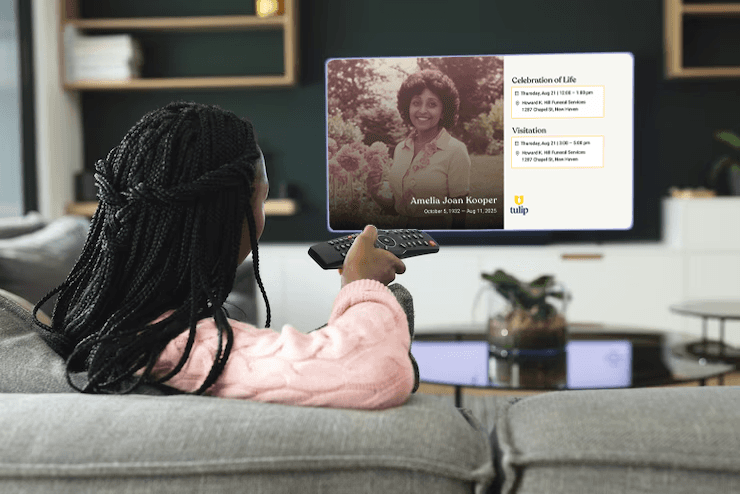
Through broadcast memorials, tribute videos, and partnerships with local television stations, funeral homes now have more opportunities to extend the care they’re already providing into the wider community. The goal is never to change the traditions families rely on. It’s to help those moments remain visible and accessible to more people.
For some families, that means a memorial appearing during the evening news and relatives texting one another to tune in. For others, it means someone who missed the service still feels connected after watching a tribute video shared online.
These aren’t large dramatic moments. More often, they’re quiet reminders that people still want to gather around memory, even if the ways they gather have evolved.
Memorial Day also carries special meaning for veterans and military families. Many funeral homes already create thoughtful tributes that reflect honor, service, and tradition with tremendous care. Broadcast memorials and video storytelling allow more members of the community to witness and participate in those moments, even if they cannot be there in person.
Memorial Day also reminds families of the civilian lives that shaped their communities in quieter ways, the teacher everyone remembers, the local coach who spent decades mentoring kids, the grandmother whose home became the center of every family holiday. Shared remembrance has always reflected the relationships and stories that connect communities together. That kind of visibility can matter deeply because remembrance has always been communal.
From our perspective, the role of storytelling is not to replace what happens in person. It’s to help carry it forward.
Carrying memory forward together
Memorial Day reminds communities to pause and remember, but for funeral professionals, that work never really stops.
You see it in the conversations families have after services conclude. You see it in the photos they return to months later. You see it in the small stories people continue telling long after ceremonies end. Video storytelling and local media partnerships can help extend those moments and keep communities connected.
Because even as the ways people communicate continue changing, the need to remember together remains the same.
{{ include_custom_fonts({"Roboto":["Bold","Medium","Regular"],"Recoleta":["Medium","Regular"]}) }}


